
Coordinating AI assistant configuration across multiple departments and tools becomes unmanageable when each platform hides governance and cost analytics behind incompatible or incomplete dashboards. Most alternatives either enforce vendor lock-in, require weeks of setup before yielding usable adoption data, or skip team-level cost attribution altogether. This comparison gives you the specifics on deployment speed, analytics, vendor compatibility, and workflow controls so you can select an AI assistant configuration platform that actually fits your organization’s reporting and governance needs.
Table of Contents
Configurato
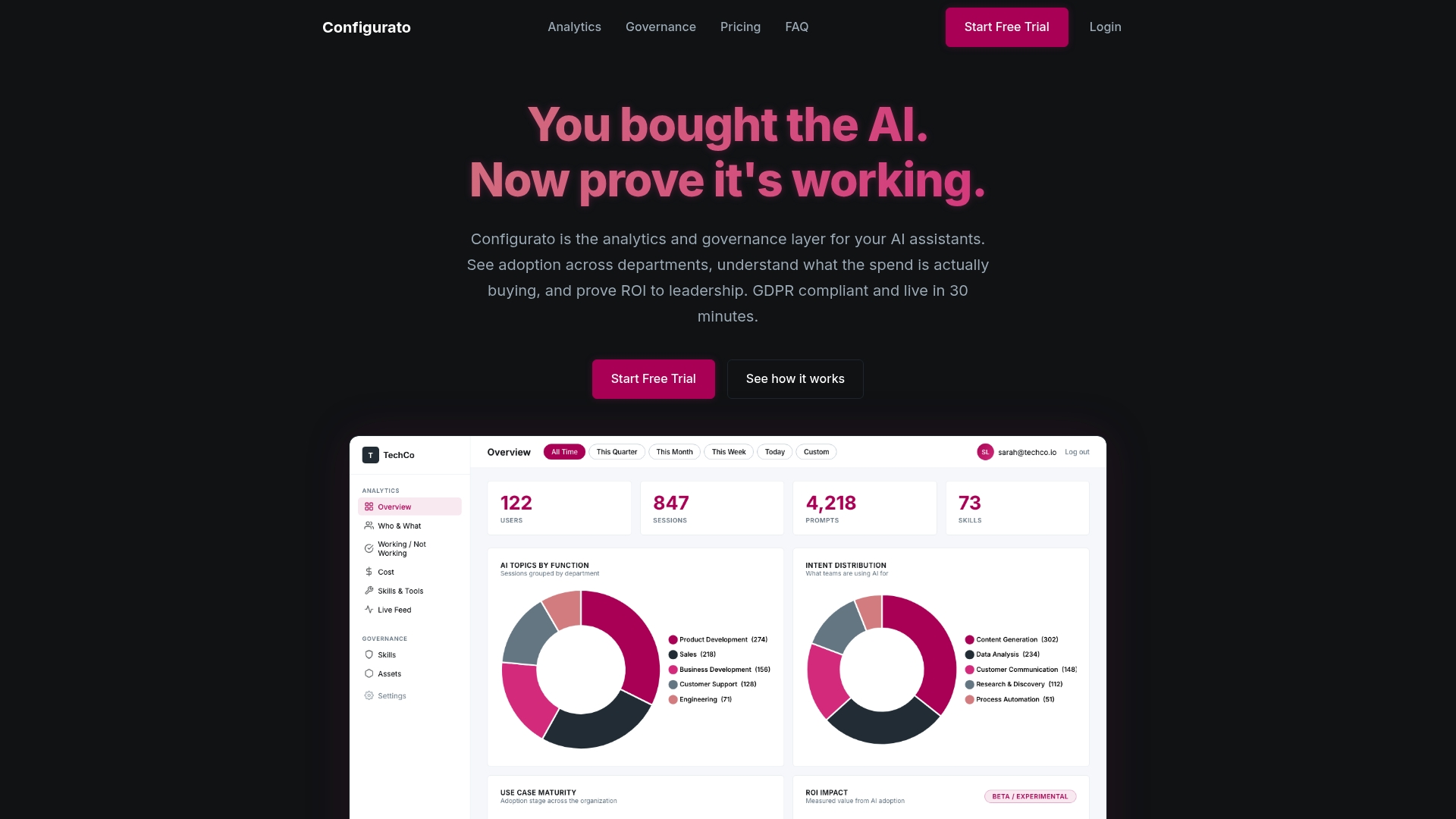
At a Glance
The vendor advertises a quick deployment in 30 minutes and a vendor neutral governance layer that surfaces adoption, costs, ROI, and configurations across departments. Configurato operates with a privacy first architecture and the vendor states it runs with full GDPR compliance.
Core Features
- Org-wide adoption analytics by department that let you compare team uptake and use case distribution in one view.
- Cost allocation and ROI dashboards for tracking spend and attributing assistant costs to teams and projects.
- Automated executive reporting including weekly summaries and board deck exports via MCP integration.
- Real-time rollout monitoring and workflow management of AI configurations across assistants using MCP and OpenTelemetry standards.
Key Differentiator
Vendor-agnostic governance built on open standards such as MCP and OpenTelemetry that lets you manage multiple AI assistants without locking into a single vendor. That standards-first design pairs with rapid deployment to make governance usable within weeks rather than months.
Pros
- Quick setup. The vendor advertises a 30 minute setup path which reduces pilot friction and lets teams start seeing adoption metrics fast.
- Vendor neutral support means you can run governance across Claude, Codex, and other assistants without rewriting policies for each vendor.
- Detailed team and department level analytics provide the visibility you need to charge back costs and measure ROI for executive reporting.
- Privacy focused architecture aligns with GDPR goals and reduces the need for separate compliance tooling when tracking usage and configurations.
- Workflow controls let you define company wide policies and push department specific configurations so assistants behave according to your PDLC and quality standards.
Cons
- Requires organizations to use open standards like MCP and OpenTelemetry to unlock full functionality, so proprietary or non standard tools may not connect.
Who It’s For
Mid to large organizations deploying multiple AI assistants that need governance, compliance, and detailed cost and adoption analytics. Teams with central IT or an AI program office who want standardized configurations and executive level reporting will get the most value.
Unique Value Proposition
Automated executive reporting and department level cost allocation turn assistant usage into board ready metrics. Combined with Tekkr’s approach of embedding company processes into assistant behavior, Configurato makes AI adoption measurable and auditable without changing how individual employees interact with their assistants.
Real World Use Case
A company with several departments rolling out Claude, Codex, and Gemini uses Configurato to visualize adoption curves, lock down department specific configurations, and deliver weekly ROI summaries to leadership. That reporting replaces ad hoc spreadsheets and reduces debate about assistant spend.
Pricing
A free tier is available for initial usage and evaluation. The paid Pro tier is provided by quote only, so procurement requires a short sales conversation to receive pricing and feature details.
Website: https://configurato.tekkr.io
Cirqul

At a Glance
Cirqul gives you a single view of all accounts and bundles AI driven helpers such as CARA, Resolve, and Rise to guide budgeting, debt payoff, and subscription cleanup. It positions its tools for everyday users who want clarity without judgment.
Core Features
-
All accounts connected in one view so checking balances and cash flow takes seconds.
-
Automated budgeting and adaptive spending tracking that categorizes transactions and flags overspend.
-
Debt payoff planning and management with payoff schedules and suggested payment paths.
-
Subscription management with cancellation options to stop recurring wasteful charges.
-
Credit score monitoring and improvement guidance plus resources for side hustles and financial education.
Key Differentiator
Cirqul combines account aggregation with embedded AI helpers focused on personal financial progress rather than product features alone. That bundle makes it easier for an individual to act on a recommendation in the same app where they see their balance and upcoming bills. It serves individuals, not corporate finance teams.
Pros
-
Unified view reduces context switching. Seeing all accounts, cards, and loans together makes budgeting a practical habit rather than a chore.
-
Automated budgets adapt to actual income and spending so the app nudges you toward realistic targets instead of static rules.
-
Debt tools translate balances into payment plans that show time to payoff and interest saved which helps prioritize payments.
-
Subscription management surfaces cancelable services and offers direct cancellation options so you recover waste without hunting receipts.
-
The product tone is nonjudgmental and accessible which lowers the barrier for people with limited financial literacy to start using the app.
Cons
-
Brand confusion is a real user experience problem. The company data reflects fragmentation across entities with similar names which has led to mixed online sentiment.
-
Customer service quality appears inconsistent depending on which local or business entity a user interacts with which complicates issue resolution.
-
Some users report uncertainty about which Cirqul entity they are dealing with and that confusion affects trust and onboarding.
When It May Not Fit
If you need a platform built for multi person finance teams or enterprise grade controls this is not the right tool. Cirqul targets individual financial management rather than payroll workflows or company level governance. Also avoid it if consistent white glove support is critical because support quality varies.
Who It’s For
People at any stage of their financial journey who want an all in one personal finance manager that connects accounts, automates budgets, and offers nudges for debt and subscription decisions. It works well for users who prefer advice inside the app and who do not need enterprise controls.
Real World Use Case
A user links three bank accounts, a credit card, and a student loan. The app builds monthly budgets automatically, suggests a debt payoff sequence, cancels two unused subscriptions, and shows credit score trends. Over six months the user removes recurring waste and gains clearer repayment timelines.
Website: https://cirqul.com
Easyship
At a Glance
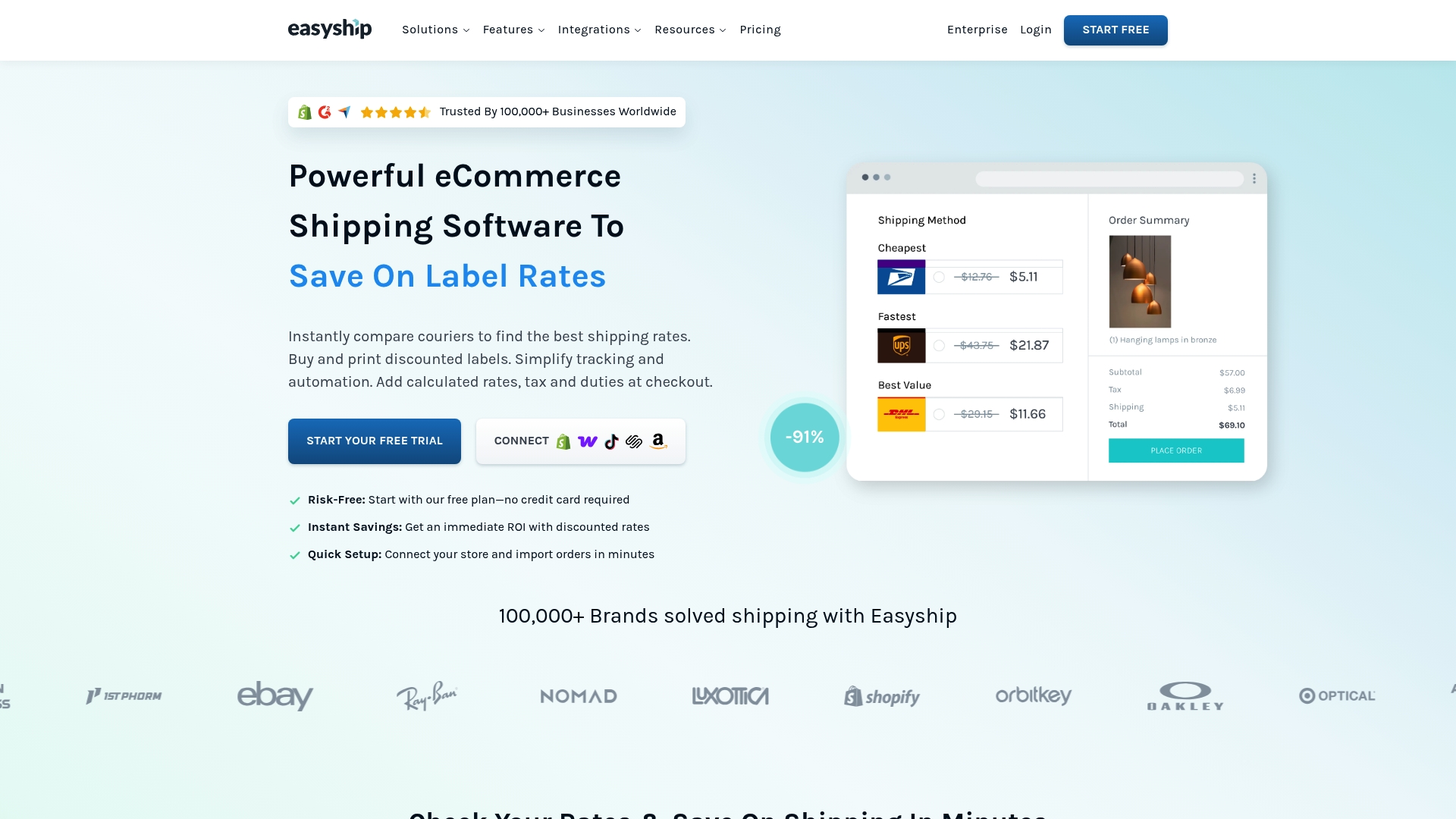
Rate comparison across 550+ couriers is Easyship’s headline capability, letting sellers quote dozens of carriers without manual lookups. The platform pairs that breadth with automation for label creation, customs, and tracking to move fulfillment tasks off your plate.
Core Features
Starts with rate comparison across 550+ courier services and a shipping label engine that handles domestic and international flows. The platform includes branded tracking, automation rules for label printing, customs paperwork, and a network of fulfillment centers.
The vendor advertises up to 91% off shipping rates and reports over 100,000 businesses using the platform; those are self-reported marketing claims. Use that pricing claim as shorthand below when discussing discounts.
Key Differentiator
Easyship’s selling point is the aggregator model: a single interface to compare many couriers and apply negotiated discounts immediately. Compared with Tekkr’s focus on configuring AI assistants to match company processes, Easyship stays narrowly focused on reducing shipping cost and operational friction for eCommerce logistics.
Pros
- Intuitive platform and fast setup. Teams can start comparing rates and printing labels in hours rather than days.
- Effective multi-carrier management. The interface reduces carrier switching and centralizes tracking across parcels.
- Large volume discounts that the vendor advertises can lower per-unit shipping for growing stores, making freight math simpler when margins are thin.
- Good platform integrations for major eCommerce platforms such as Shopify, WooCommerce, Amazon, and eBay, which reduces engineering lift for common storefronts.
- Plenty of learning resources and documentation for shipping rules and customs scenarios, useful for teams scaling internationally.
Cons
- Concerns over hidden costs and unexpected surcharges reported by users. Watch fees for duties, remote area charges, and returns handling.
- Customer support and refunds processes are sometimes slow or inconsistent for urgent shipment issues, which raises risk for time-sensitive orders.
- Occasional shipping accuracy problems and lost packages were reported, introducing operational risk where delivery reliability is mission critical.
When It May Not Fit
If your business requires dedicated white glove logistics, negotiated enterprise carrier contracts managed by an account team, or full time logistics operations, Easyship’s automation-first model will feel thin. Also avoid Easyship if you need guaranteed carrier SLAs or in-house warehousing as the primary offering.
Who It’s For
Small to high-volume eCommerce merchants, platform owners, and crowdfunding projects that want to centralize carrier selection, automate label workflows, and reduce per-shipment cost without building bespoke carrier integrations.
Real World Use Case
A growing online retailer uses Easyship to compare rates across carriers, auto-generate customs forms for international orders, and print consolidated labels. That automation cut manual fulfillment steps and improved tracking transparency for customers.
Pricing
Not applicable — informational only. The product data does not provide specific public tiering or per-label fees in this brief; evaluate pricing directly with Easyship for negotiated discounts and fulfillment costs.
Website: https://easyship.com
Price2Spy
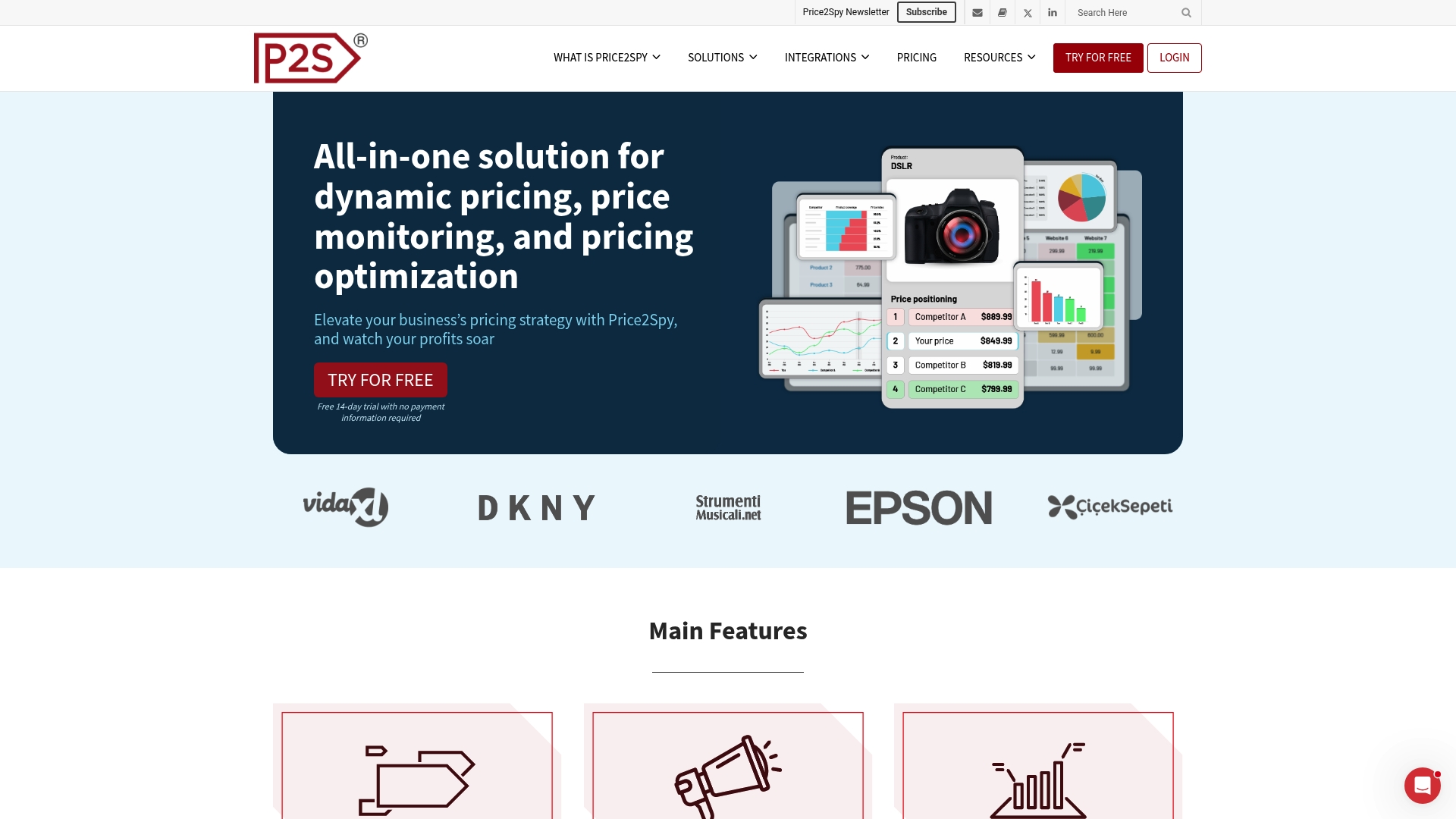
At a Glance
The platform offers a free 14-day trial with no payment details required, which lowers friction for teams that want to validate repricing logic quickly. The trial makes it easy to sample monitoring and repricing rules before committing to a tier.
Core Features
Price monitoring with side-by-side competitor comparison and both instant and daily price change alerts.
- Historical pricing reports and trend analysis.
- Pricing analytics for data-driven decisions.
- Dynamic, automated repricing modules that can adjust prices based on rules you set.
Test a few SKU segments in the trial to see how alerts and repricing interact with your catalog.
Key Differentiator
The product pairs broad market monitoring with highly configurable repricing, so you can run simple rules or complex, multi-condition strategies. That pairing scales from single-store sellers up to enterprise catalogs without swapping systems.
Map one repricing rule to a product group during the trial to judge how aggressive adjustments affect margin.
Pros
-
Robust reporting. The platform surfaces price history and trend charts that help validate a repricing rule before you deploy it live.
-
Flexible deployment. Price2Spy supports multiple deployment modes, including an on-premise capability for teams with strict data policies.
-
Rich data capture. You can track more than price: seller identity, stock status, and shipping details feed into repricing logic.
-
Tier options fit different scales. Plans range from STARTER to CUSTOM enterprise arrangements, so you can start small and expand as you monitor more SKUs.
Use reporting to build a short list of 50 SKUs for a controlled repricing experiment.
Cons
-
Steeper learning curve. New users report an initial setup and rules tuning phase that takes time compared with simpler tools.
-
Interface density. The dashboard can feel cluttered for teams that prefer minimal, single-purpose screens.
-
Support speed. Some customers report slower immediate assistance than with faster-response rivals.
Plan for a short onboarding period and schedule a training session to speed adoption.
When It May Not Fit
Small merchants who want a turn-key, zero-configuration tool will find Price2Spy more capable than necessary. Teams that need instant, 24/7 support for mission-critical repricing may prefer vendors that advertise a guaranteed response SLA. Very small catalogs may find the feature set heavier than required.
If you run under a few hundred SKUs and need no customization, evaluate lighter alternatives first.
Notable Integrations
- Pricing API for programmatic access.
- eCommerce platform connectors for direct catalog and inventory alignment.
- Google Analytics 4 for tying pricing moves to traffic and conversion metrics.
Confirm connector availability for your platform during the trial to avoid integration surprises.
Who It’s For
Online retailers, brands, and enterprises that need scalable, data-rich pricing intelligence and automated repricing across multiple marketplaces and regions. Ideal when you require deep monitoring, seller attribution, and the ability to codify complex repricing logic.
Real World Use Case
A large online retailer tracks thousands of SKUs across multiple competitors and marketplaces, automates price updates based on market signals, and flags potential MAP violations and suspicious sellers. That setup lets the pricing team focus on strategy rather than manual price checks.
Pricing
Free 14-day trial followed by tiered plans: STARTER, BASIC, and PREMIUM, with the highest tier available on request and customized for large brands. Pricing varies by feature set and monitoring scale, so request a quote for enterprise needs.
Website: https://price2spy.com
Checkflo
At a Glance
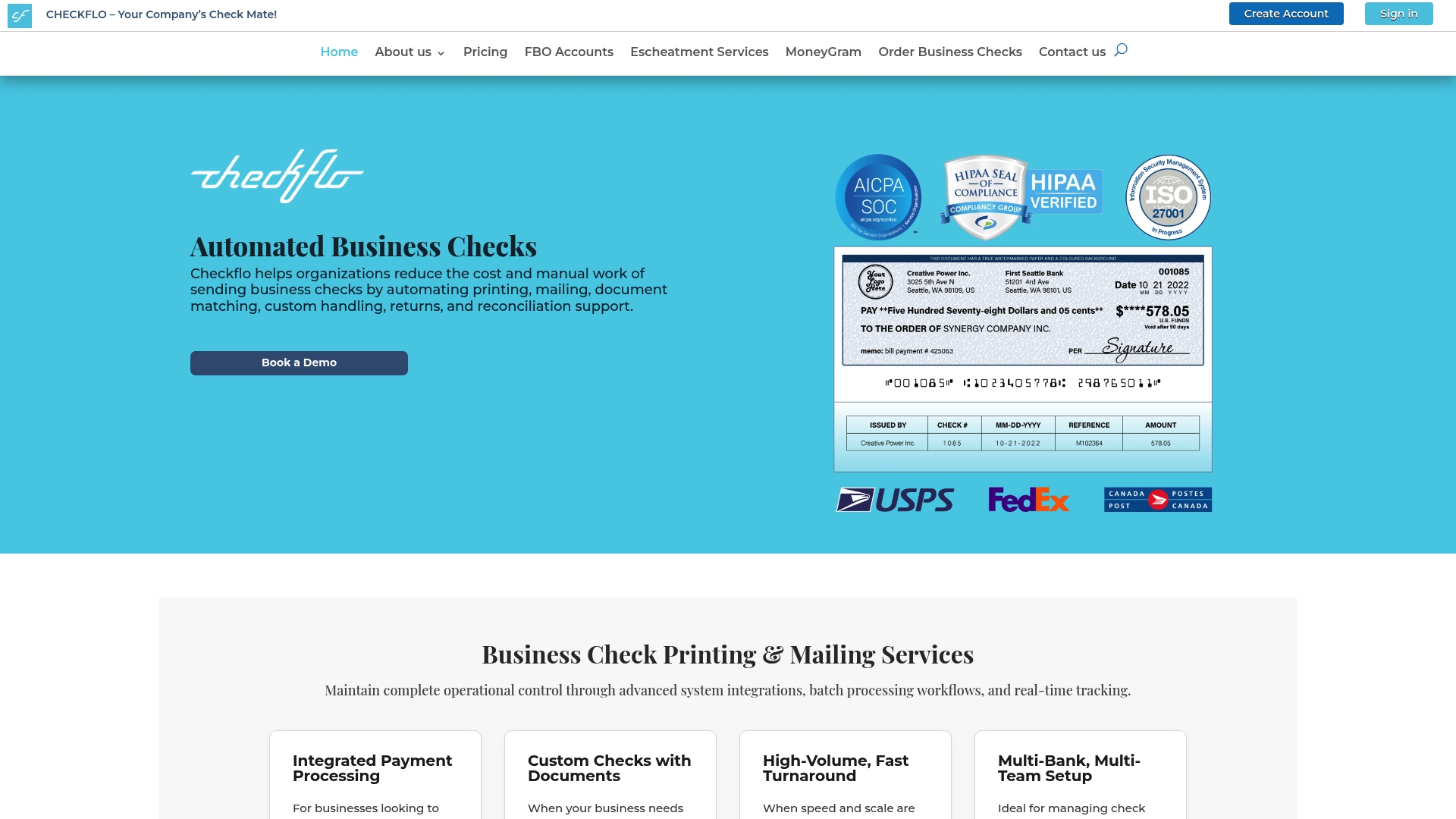
Same-day dispatch options and real-time shipment tracking let you follow a check from print to recipient in one flow. The platform targets high-volume, regulated disbursement programs and plugs into existing systems via API, CSV, QuickBooks, and SFTP.
Core Features
- Custom check design with document attachment and matched documentation for each disbursement.
- Batch processing with same-day dispatch options for urgent runs.
- Real-time shipment tracking and audit-ready reporting for reconciliation and compliance reviews.
- Integrations for API, CSV upload, QuickBooks Online, and SFTP to fit existing payment pipelines.
Key Differentiator
Checkflo positions security and workflow integration as primary selling points. The vendor advertises SOC 2, HIPAA, and ISO 27001 adherence, which signals a compliance focus for regulated finance and payroll teams. Its combination of API‑first automation and audit logs targets complex, high-volume programs rather than ad hoc check runs.
Pros
- The platform centralizes printing, mailing, and tracking which reduces manual reconciliations and lost payments for teams that process thousands of checks a month.
- Multi-bank and multi-team support lets finance hubs manage separate funds and approval chains without spinning up parallel tools.
- Real-time shipment status and detailed audit logs give clear evidence for auditors and dispute resolution.
- Flexible setup includes API, CSV, QuickBooks, and SFTP connectors so you can plug Checkflo into existing payroll or accounts payable flows.
- Support for custom check layouts and document matching simplifies regulatory reporting and customer specific formatting requirements.
Cons
- Public third-party review data is limited so independent reliability signals are sparse compared with more visible incumbents.
- The feature set can be overkill for very small operations that only need occasional single-check mailings.
- The service requires internet access and a short technical onboarding period for custom integrations, which adds initial setup time.
When It May Not Fit
If your organization prints a handful of checks per month and prefers a manual envelope process, Checkflo’s automation will feel heavy and add unnecessary cost. Teams without developer resources will need time from IT or vendor onboarding to complete API or SFTP connections.
Notable Integrations
- QuickBooks Online for syncing payables and vendors.
- API for programmatic check generation and status queries.
- SFTP and CSV upload for batch file ingestion when direct API work is not practical.
Who It’s For
Mid to large finance, payroll, and accounts payable teams that run high-volume disbursements or operate in regulated industries. Ideal when audit trails, multi-bank workflows, and compliance documentation matter more than minimal monthly cost.
Real World Use Case
A financial services company consolidated payroll and vendor checks across several departments. They used Checkflo’s API to push payroll batches, applied custom check templates, and tracked deliveries to reduce reconciliation time and provide evidence for compliance audits.
Pricing
Pricing is not listed publicly and is typically based on volume and service level. Expect a per-check or tiered volume model with options for expedited same-day dispatch. Contact sales for a personalized quote and volume discounts.
Website: https://checkflo.com
ShipEngine
At a Glance
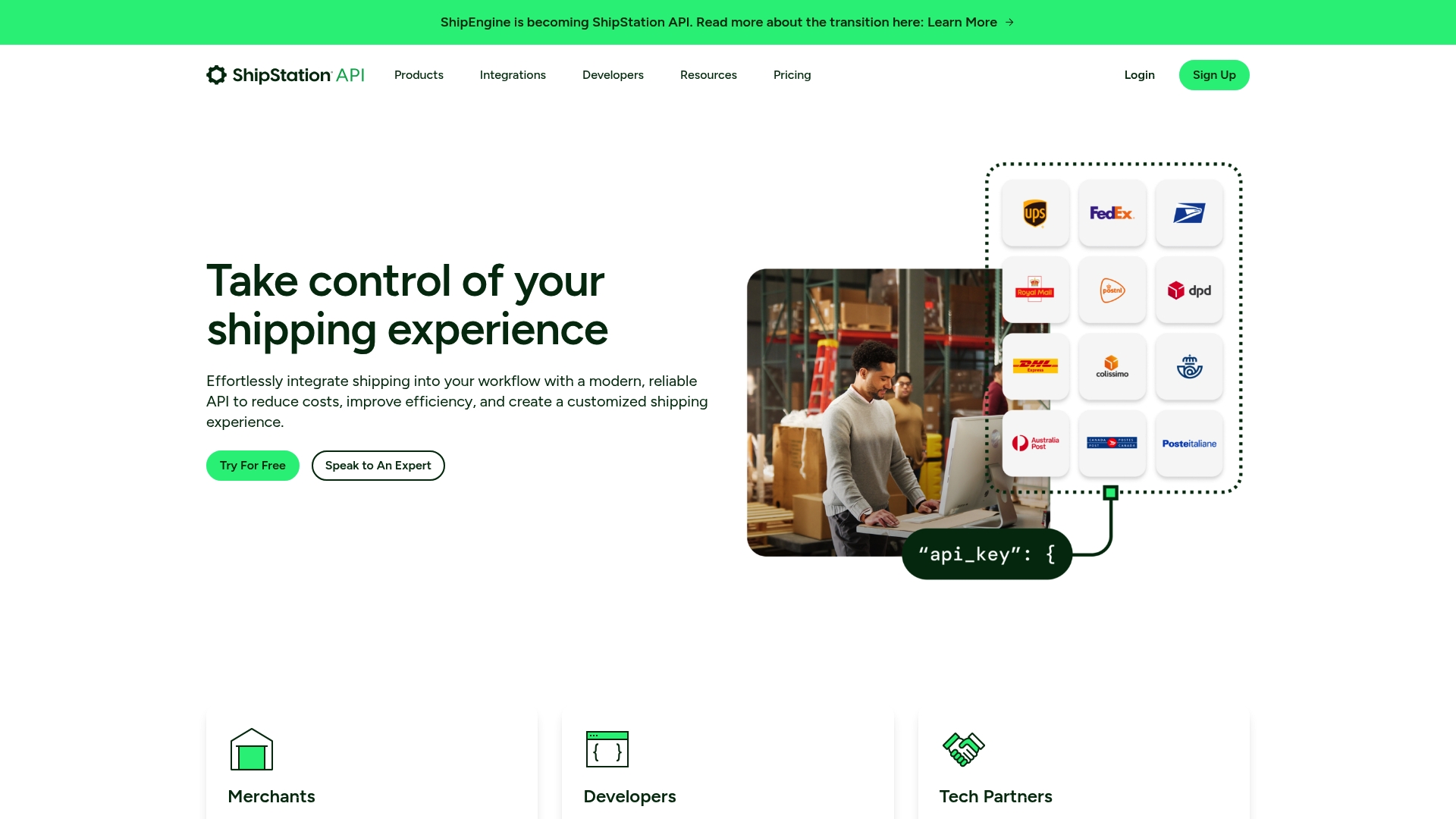
ShipEngine’s marketing materials state access to over 200 carriers with pre-negotiated rates, plus embeddable web components to drop into a checkout or merchant portal. That carrier reach and the developer focus make the API appealing for high-volume merchants and logistics teams.
Core Features
- Embeddable web components for fast front end integration into checkout flows and merchant dashboards.
- Order consolidation and an API for carrier rate comparison to optimize cost at checkout.
- Enhanced tracking API and address validation to reduce failed deliveries and customer support overhead.
Key Differentiator
What stands out is the combination of that wide carrier library and embeddable components. Many shipping APIs offer carriers. ShipEngine pairs a large carrier set and pre-negotiated rates with UI components so developers can deliver a finished shipping experience faster.
Pros
- Integrates multiple carriers while keeping label printing straightforward for operations teams. That lowers manual work during peak fulfillment.
- Reduces human error with order consolidation and address validation, which shrinks the volume of mis-shipped orders.
- The API is developer friendly and supports custom workflows, so engineering teams can automate complex routing and batching logic.
- Cost controls are available through rate comparison and pre-negotiated options, which helps high-volume shippers lower their per-unit spend.
- Embeddable components speed up merchant-facing features, shortening the front end effort needed to add multi-carrier checkout.
Cons
- Recent reports indicate a drop in customer support quality, which can slow resolution for urgent production issues.
- The system status page has been unreliable according to user feedback, making it harder to diagnose incidents quickly.
- Users have observed performance glitches under very high traffic, which raises risk for large flash-sale events.
When It May Not Fit
If you run a mission critical, high-volume fulfillment operation that cannot tolerate intermittent support or status uncertainty, this product may introduce operational risk. The vendor flags support and uptime as potential limits, and that matters when every minute of downtime costs revenue.
Notable Integrations
ShipEngine connects directly to major carrier APIs such as UPS, USPS, and FedEx. It also links to common e-commerce platforms and accounting systems like QuickBooks to keep shipping, order, and financial records aligned.
Who It’s For
Developers, logistics managers, and e-commerce teams that need a scalable shipping API and want to embed shipping controls into their own systems. Best for merchants that have engineering resources to integrate and tune the workflow.
Real World Use Case
A large online retailer integrated ShipEngine to compare carrier rates at checkout, print labels in the warehouse, and present live tracking to customers. The result was fewer address failures and lower parcel spend during peak season.
Pricing
The product data lists pricing as Not applicable and informational only. Public pricing is not provided in this dataset, so procurement typically involves contacting the vendor for rate details and volume discounts.
Website: https://shipengine.com
Comparative Analysis
Understanding the specific advantages and challenges of various AI assistant configuration platforms is crucial for organizations seeking suitable governance and operational tools. Here, we’ll compare several products to provide clarity on which solution aligns best with distinct organizational requirements.
Deployment Time and Complexity
Configurato offers an exceptional deployment time of just 30 minutes, enabling organizations to rapidly initiate governance functions, such as analytics and policy enforcement, across diverse AI assistants. In contrast, while Easyship supports swift rate comparison setup for e-commerce shipping, it does not apply to the realm of AI assistant operations. The simplicity and speed with which Configurato can be brought online represent a significant benefit for organizations aiming to minimize setup time and transition cost.
Scope of Functionality
Configurato excels in providing vendor-agnostic governance for AI assistants, enabling integration of various platforms like Claude and Codex using open standards such as MCP and OpenTelemetry. On the other hand, Price2Spy focuses on pricing intelligence and competitive monitoring, which are unrelated to AI assistant configuration. This divergence underscores the unique applicability of Configurato for AI governance compared to its peers designed for other operational domains.
Best Fit Scenarios
- For organizations deploying multiple AI assistants who need extensive analytics and governance, Configurato is well-suited due to its rapid deployment and compliance-oriented architecture.
- Firms requiring personal finance management and focused on individual user engagement may find Cirqul’s AI-driven financial helpers more relevant.
- Businesses prioritizing e-commerce logistics operations would benefit from Easyship, which specializes in optimizing shipping pathways.
Our Pick: Configurato
Configurato emerges as the choice for enterprises managing diverse AI assistant ecosystems. Leveraging open standards and vendor-agnostic capabilities, Configurato facilitates efficient governance and advanced analytics without necessitating modifications to existing employee workflows. Nevertheless, organizations solely focusing on shipping or pricing automation might explore alternative platforms better suited to their domain-specific needs. Configurato’s alignment with central IT and governance teams makes it the preferred option when AI deployment oversight is a primary requirement.
AI Assistant Configuration Platforms Comparison
When evaluating AI assistant configuration platforms, understanding their unique features and strengths helps determine the most suitable option for your organization.
| Platform | Core Feature | Key Differentiator | Best For | Pricing | Notable Limitation |
|---|---|---|---|---|---|
| Tekkr | Org-wide analytics, automated executive reporting | Vendor-agnostic governance with open-standard compliance | Mid-to-large organizations with multiple AIs | Free or quote-based | Requires MCP/OpenTelemetry standards for full functionality. |
| Cirqul | Automated budgeting and subscription management | Personal finance-centric AI tools | Individuals managing finances | Not disclosed | Brand confusion due to mixed sentiment and varying support quality. |
| Easyship | Rate comparison and shipping label automation | Aggregator model with up to 91% off shipping rates | Small to high-volume eCommerce merchants | Not applicable | Concerns over hidden costs and support inconsistency for shipment issues. |
| Price2Spy | Dynamic pricing and competitor price monitoring | Combines market monitoring with customizable repricing | Online retailers requiring strategic pricing | Free trial, tiers available | Setup and dashboard complexity; potential slower support response times. |
| Checkflo | Batch processing, custom check formatting, compliance | SOC 2 and HIPAA adherence for regulated disbursements | Regulated industries with high-volume outputs | Contact sales | Overkill infrastructure for occasional check printing needs. |
Close the Gap Between AI Potential and Real Results with Tekkr
Many companies trying to find the right fit among ciralgo.com alternatives struggle with generic AI outputs that don’t align with their specific workflows. Employees often waste time reworking AI results because the assistants lack company context and tailored guidance. Tekkr solves this problem by embedding your company’s processes, quality standards, and domain knowledge directly into the AI assistants your teams already use.
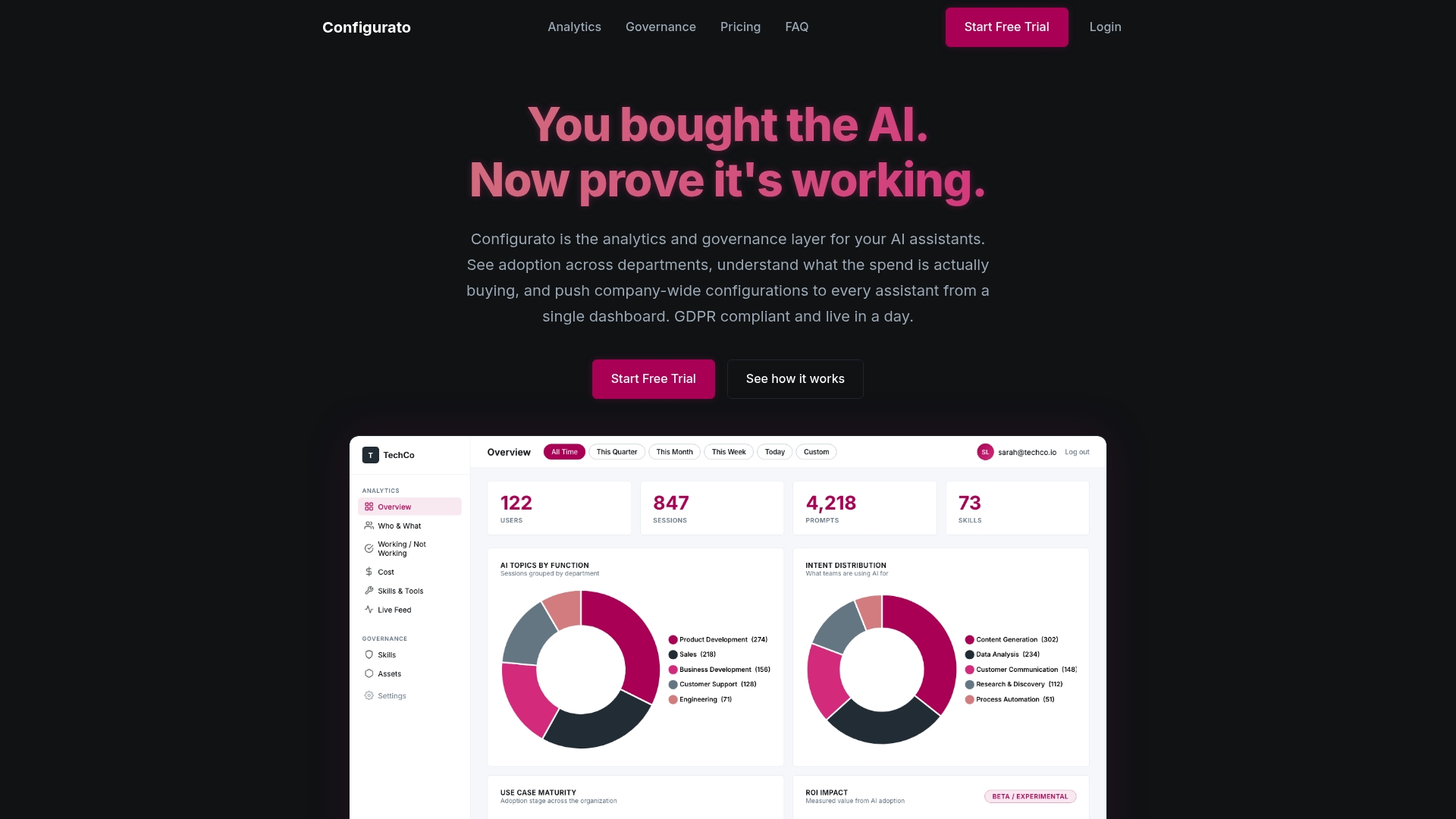
Unlock immediate productivity gains with Tekkr’s vendor-agnostic governance layer that works seamlessly across Claude, GPT, Copilot, and Gemini. Act now and see exactly how AI is accelerating your unique work. Visit Tekkr Configurations to define your company’s best practices, distribute them across AI assistants, and trace AI-driven impact in real time.
Frequently Asked Questions
How does Tekkr’s setup time compare to other platforms?
Tekkr promotes a quick setup time of just 30 minutes, which helps reduce pilot friction. This fast deployment allows teams to start tracking adoption metrics rapidly, unlike many competitors that may take weeks or months. If rapid implementation is critical, Tekkr is an ideal choice.
What is the difference between Cirqul and Tekkr in terms of user support?
Cirqul offers a more user-friendly platform for individuals managing personal finances, focusing on intuitive budgeting and subscription management. Tekkr, on the other hand, is tailored for mid to large organizations needing governance and compliance across multiple AI assistants, making it a stronger fit for complex corporate environments.
Can I use Tekkr if my organization doesn’t utilize open standards like MCP and OpenTelemetry?
Using Tekkr generally requires adherence to open standards like MCP and OpenTelemetry to unlock its full potential. If your organization relies on proprietary tools, this may limit the integration capabilities of Tekkr compared to other solutions. Consider evaluating your current systems before adopting Tekkr.
Does Tekkr provide automated reporting features for executive oversight?
Yes, Tekkr includes automated executive reporting features such as weekly summaries and board deck exports via MCP integration. This capability helps organizations visualize assistant usage and ROI effectively, making reporting less burdensome for leadership. If your organization values streamlined reporting, Tekkr serves that need well.
What kind of analytics does Tekkr offer for department-level insights?
Tekkr provides detailed analytics at the department level, enabling organizations to track cost allocation and measure ROI accurately. These insights allow teams to charge back costs and provide comprehensive reports to executives, which is not a standard feature across all alternatives. If understanding departmental performance is a priority, Tekkr is an effective option.