
Most business teams have deployed AI assistants. Far fewer are getting real value from them. The gap is predictable: employees prompt generically, skip company context, and spend more time fixing AI output than they saved generating it. If that sounds familiar, you are not dealing with a tool problem. You are dealing with a usage problem. This ai assistant best practices guide gives you a concrete path forward, covering preparation, implementation, quality control, and continuous improvement so your team stops reworking AI output and starts shipping work that is actually usable.
Table of Contents
- Key Takeaways
- Before you deploy: laying the right foundation
- Step-by-step AI assistant implementation
- Troubleshooting common AI assistant problems
- Measuring AI assistant performance over time
- My take: governance is your competitive moat
- How Tekkr helps you implement AI assistant best practices
- FAQ
Key Takeaways
| Point | Details |
|---|---|
| Govern before you deploy | Establish executive sponsorship, data privacy rules, and defined human roles before any AI assistant goes live. |
| Prompt with precision | Specific, context-rich instructions produce output that requires far less rework than vague, generic prompts. |
| Human oversight is non-negotiable | Risk-tiered review workflows reduce compliance violations and protect your organization from reputational damage. |
| Monitor for behavioral drift | AI assistants degrade over time without active monitoring, random output audits, and structured feedback loops. |
| Measure what actually matters | Track operational efficiency, decision quality, and strategic impact, not just usage volume. |
Before you deploy: laying the right foundation
The most common AI implementation mistake is treating deployment as an IT project rather than an enterprise-wide initiative. Buying licenses and turning the tool on is the easy part. What breaks teams is the absence of any structure around how the assistant should behave, who owns it, and what success looks like.
Start with governance. AI governance requires board-level engagement, dedicated AI risk committees, and a Center of Excellence that reports to an executive sponsor with real budget authority. That is not overhead. That is the mechanism that keeps your deployment from drifting into territory that creates legal or reputational exposure.
Before you go live, work through this checklist:
- Confirm data privacy and compliance requirements for every jurisdiction where the assistant will operate
- Define which roles have authority to approve, edit, or override AI-generated output
- Set naming conventions, attribute labels, and semantic models so the assistant references internal data correctly
- Assess API connectivity and data quality for any integration points the assistant will touch
- Assign every autonomous AI agent a named human executive owner with defined authority and a clear audit trail requirement
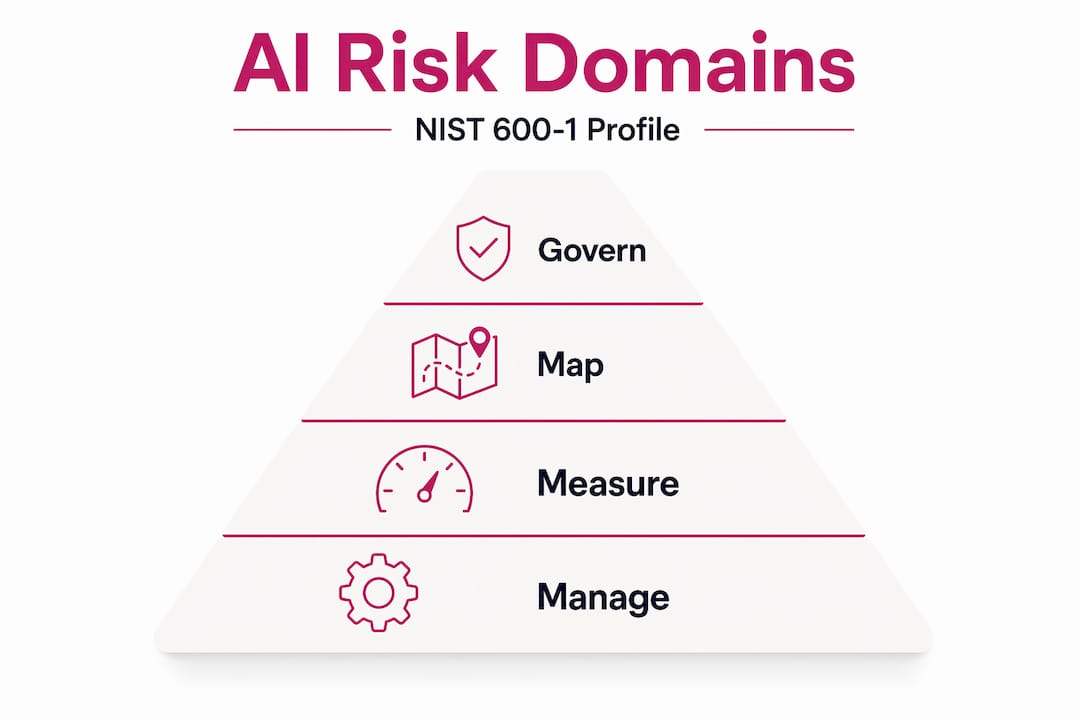
The NIST AI 600-1 Profile maps 12 generative AI risk categories across four core functions: Govern, Map, Measure, and Manage. Walking your preparation process through that framework before launch is one of the fastest ways to identify gaps you would otherwise discover at the worst possible moment.
Pro Tip: Document what your AI assistant may and may not say before it interacts with a single customer or stakeholder. Defining communication boundaries upfront prevents the model from overreaching in ways that create reputational exposure later.
| Preparation area | Key requirement |
|---|---|
| Data privacy | Confirm regulatory compliance per jurisdiction |
| Role definition | Name human owners with audit trail authority |
| API readiness | Validate data quality at all integration points |
| Governance structure | Establish executive sponsor and risk committee |
| Communication rules | Define allowable and prohibited assistant outputs |
Step-by-step AI assistant implementation
Once your foundation is in place, the quality of your implementation comes down to three things: how you instruct the assistant, how you structure human involvement, and how you handle complexity.
-
Write specific, context-rich prompts. Generic prompts produce generic output. Tell the assistant who it is serving, what the deliverable looks like at your company, and what constraints apply. A product manager who specifies the template format, audience, and relevant process will get a draft that needs minimal revision. One who types “write a product spec” will spend an hour fixing it.
-
Use AI memory deliberately. Most enterprise AI tools allow persistent memory or system-level instructions. Use that space to embed your company’s quality standards, terminology, and process rules. This is where guidelines for AI technology usage shift from policy documents on a shared drive to actual behavior in the tool.
-
Build risk-tiered human review into every workflow. Not all AI output carries the same risk. A draft internal FAQ needs less scrutiny than a customer-facing compliance document. A two-person review workflow on high-risk outputs reduces compliance violations by up to 68%. Scale your review intensity to the actual stakes of each output type.
-
Use Plan Mode for complex requests. When a task involves multiple steps or dependencies, have the assistant break it into an explicit task list with clear completion criteria before executing. This Plan Mode approach reduces errors on complex requests by forcing the model to surface assumptions before generating output you then have to unwind.
-
Build structured incident response playbooks. Use structured response playbooks to cover behavioral hijack, runaway agent scenarios, and delegation chain failures. These are not edge cases. They are predictable failure modes in any agentic deployment, and having a documented response is what separates organizations that recover quickly from those that scramble.
Pro Tip: When optimizing AI assistants for a specific function, such as customer support or contract review, run ten representative real-world tasks through the assistant before launch. Score each output against your quality standard. What you find will tell you more than any configuration review.
The biggest implementation mistake beyond skipping governance is treating your first configuration as your final one. Maximizing AI assistant efficiency is an iterative process. The initial rollout is a baseline, not a destination.

Troubleshooting common AI assistant problems
Even well-configured assistants drift. Models update, user behavior shifts, and the gap between what the assistant was set up to do and what it is actually doing widens quietly over time. Here is where most teams lose the productivity gains they fought hard to set up.
The problems you need to monitor for actively are:
- Hallucinations and fabricated citations in outputs, particularly in research, legal, and compliance contexts
- Biased or outdated outputs that reflect training data rather than current company policy or market reality
- Communication boundary violations where the assistant says something outside its defined scope
- Behavioral drift in tone, format, or decision-making that accumulates across weeks without triggering any single alarm
“AI must support, not replace, human judgment; it requires continuous monitoring and explicit disclosure to users.” — Responsible AI Use in the Workplace
One of the most underused quality controls is random output sampling. Auditing 5 to 10 percent of human-approved AI outputs monthly catches drift before it becomes a pattern. Pair that with an audit trail on every reviewed output and you have the compliance documentation most organizations wish they had built from the start.
Also document what the assistant refuses to answer or handles badly. Tracking these “negative space” requests, the queries the assistant cannot answer or handles poorly, is a direct window into where your configuration needs work. Monitoring unhandled requests reveals feature gaps and training priorities you would not surface any other way.
The human-in-the-loop is not a workaround for imperfect AI. It is a permanent design requirement. Effective oversight requires risk-based tiering and retrospective audits, not a single approval checkbox. Build that expectation into your team culture from day one.
Measuring AI assistant performance over time
Usage metrics lie. An assistant that is used constantly but producing output that gets heavily edited is not delivering value. It is creating the illusion of productivity while consuming more time than it saves. Measuring what actually matters requires a more deliberate framework.
| KPI category | What to track |
|---|---|
| Operational efficiency | Time from task initiation to approved output; rework rate per output type |
| Decision quality | Error rate in high-risk outputs; compliance violation frequency |
| Strategic impact | Business outcomes tied to AI-assisted work; hours redirected to higher-value tasks |
| Behavioral health | Anomaly flags; response consistency across similar prompts |
Runtime behavioral metrics matter as much as outcome data. Set up telemetry to flag anomalies when the assistant’s response patterns shift outside a normal range. A sudden spike in escalations or a drop in first-pass approval rates is a signal worth investigating before it becomes a crisis.
Feedback loops are where improvement actually happens. Create a structured process for users to flag low-quality outputs, and route those flags into a regular review cycle that updates your configuration, not just your training documentation. AI governance as enterprise strategy means the board-level risk committee is reviewing AI performance trends on a recurring basis, not just responding to incidents.
Pro Tip: Schedule a quarterly policy review where you revisit your AI assistant’s communication boundaries, escalation rules, and review tier definitions. Your business changes. Your AI configuration needs to keep pace.
Compliance documentation is also a measurement asset, not just a legal obligation. Audit trails, review logs, and sampling reports give you the evidence base to demonstrate responsible use to regulators, clients, and executive stakeholders when it matters.
My take: governance is your competitive moat
I have watched a lot of enterprise AI rollouts from close range. The pattern is consistent. The organizations that focus on governance early do not just avoid problems. They compound advantages the organizations that skip it cannot replicate.
In my experience, the teams that treat this as a cross-functional initiative with real executive ownership are the ones whose AI assistants actually get better over time. Their configurations grow richer. Their output quality rises. And they accumulate benchmarking data that tells them exactly where they outperform peers. The teams that treat it as an IT deployment checkbox watch their AI usage numbers climb while their competitive advantage stays flat.
What I have learned from watching both groups is that the accountability register matters more than the model choice. Knowing which human executive owns each AI agent, and knowing that owner is genuinely accountable for that agent’s behavior, changes how carefully configurations get built and maintained. It shifts AI from a productivity experiment to a managed business asset.
The uncomfortable truth is that most companies are not ready for agentic AI at the scale they are deploying it. They are running ahead of their governance maturity. That gap closes one of two ways: proactively, by building the structures described here, or reactively, after a compliance violation or reputational incident forces the conversation. I know which path I would choose.
— TekkrTools
How Tekkr helps you implement AI assistant best practices
If everything in this guide sounds right but your team lacks the bandwidth to build it from scratch, that is exactly the problem Tekkr was designed to solve.
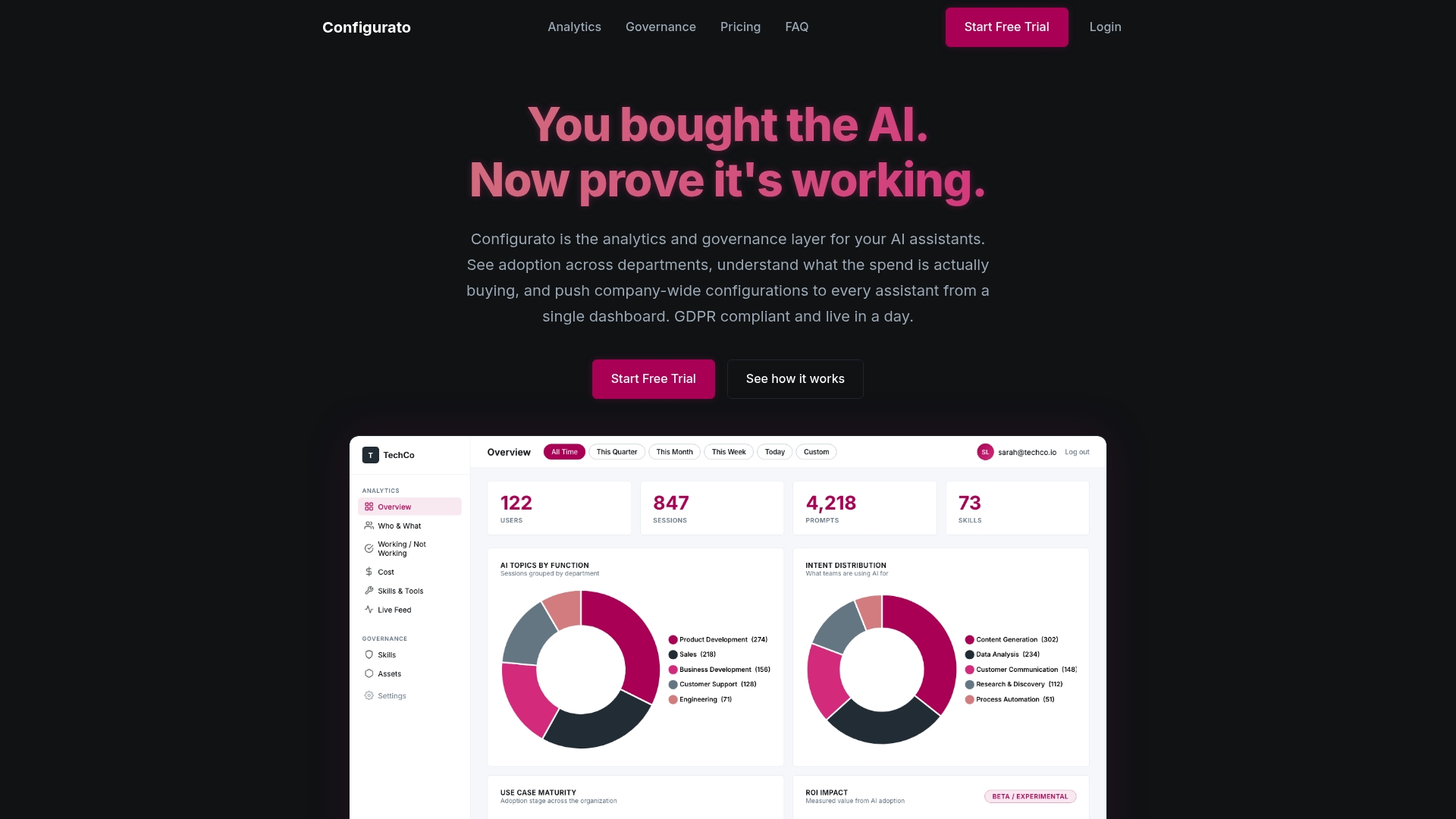
Tekkr’s Configurato platform embeds your company’s processes, quality standards, and domain knowledge directly into whichever AI assistants your team already uses, without requiring employees to change their workflows or learn a new tool. When a product manager prompts Claude or an engineer queries Copilot, the output already reflects your internal standards. Governance, escalation rules, and audit trails are built in from the start. Tekkr also surfaces workforce analytics insights that show you where AI is actually accelerating work and where it is not, so you can act on real data rather than assumptions. If you are ready to close the gap between AI adoption and AI performance, Tekkr is where that work starts.
FAQ
What is an AI assistant best practices guide?
An AI assistant best practices guide is a structured set of recommendations covering governance, implementation, quality control, and performance measurement for teams deploying AI assistants in business workflows.
How do you reduce compliance violations with AI assistants?
Implementing a mandatory two-person review on high-risk AI outputs reduces compliance violations by up to 68%, according to research on generative AI review workflows.
How often should AI assistant outputs be audited?
Best practice is to audit 5 to 10 percent of human-approved outputs monthly through random sampling, which catches behavioral drift before it becomes a systemic quality or compliance problem.
What KPIs should you track for AI assistant performance?
Track operational efficiency metrics like rework rate and time to approved output, decision quality metrics like error and violation frequency, and strategic impact metrics like hours redirected to higher-value work.
Why does AI assistant output quality degrade over time?
Output quality degrades due to model updates, shifting user behavior, and configuration gaps that widen without active monitoring. Regular policy and configuration reviews, paired with feedback loops and audit trails, are the standard controls for maintaining quality.